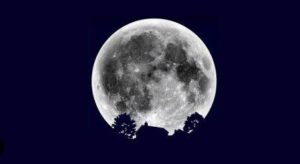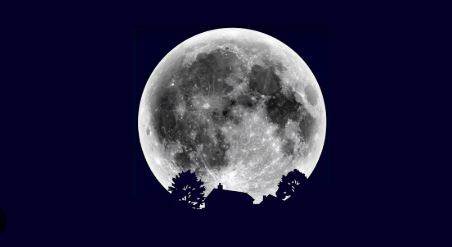
supermoon 2025 ISLAMABAD — Stargazers around the world are gearing up for a spectacular celestial event tonight as the first supermoon of 2025 graces the night sky with its radiant presence. According to the Pakistan Space and Upper Atmosphere Research Commission (SUPARCO), this marks the first of three supermoons expected to appear this year, giving astronomy enthusiasts multiple opportunities to witness one of nature’s most breathtaking lunar displays.
supermoon 2025 What Makes a Supermoon Special?
A supermoon occurs when the full moon coincides with its perigee, the point in the Moon’s elliptical orbit where it is closest to Earth. During this alignment, the Moon appears both larger and brighter in the sky than a typical full moon, sometimes creating striking optical illusions near the horizon where it seems unusually massive.
Tonight’s supermoon will be approximately 224,599 miles (361,400 kilometers) away from Earth, making it 6.6% larger and nearly 13% brighter than an average full moon. Observers across the globe can expect a luminous, glowing disc that is visible even in moderately lit urban areas, making it perfect for casual viewing and moon photography.
Astronomers emphasize that such events are not only visually stunning but also scientifically significant. The Moon’s increased brightness can have subtle effects on Earth’s tides, slightly intensifying what are known as “spring tides,” and serves as a reminder of the dynamic nature of our planet’s celestial environment.
supermoon 2025 Timing and Visibility
According to SUPARCO, the first supermoon became visible around 8:47 PM local time and will remain observable until just before sunrise. This gives skywatchers ample time to enjoy the lunar spectacle, whether from city rooftops, parks, or countryside locations with minimal light pollution.
For those in Pakistan, clear skies will offer a stunning view, while the supermoon will also be visible across Asia, Europe, the Americas, and other parts of the world, weather permitting. In areas where clouds or rain obstruct the sky, binoculars or telescopes may enhance the viewing experience.
SUPARCO also noted that the brightest supermoon of 2025 will occur in November, when the Moon reaches an even closer distance of 221,817 miles (357,000 kilometers) from Earth. The third supermoon of the year is slated for December 5, offering another opportunity for skywatchers to marvel at the Moon’s beauty before the year concludes.
supermoon 2025 Science Behind the Supermoon
The term “supermoon” is relatively modern, coined by astrologer Richard Nolle in 1979, but the phenomenon itself has been observed and documented for centuries. What makes tonight’s lunar display remarkable is the combination of full phase and perigee proximity, which produces an eye-catching increase in size and luminosity.
Experts explain that the Moon’s orbit is not a perfect circle but an ellipse, causing its distance from Earth to vary between perigee (closest approach) and apogee (farthest distance). During perigee, the Moon appears up to 14% larger and 30% brighter than when it is at apogee, although atmospheric conditions and local horizon perspectives can make this difference seem even more dramatic.
Astronomers also point out that supermoons are excellent opportunities to study lunar features such as craters, maria, and mountain ranges, which appear sharper and more detailed through telescopes due to the increased apparent size.
Tips for Observing and Photographing
For those planning to witness tonight’s supermoon, experts recommend several tips:
-
Location: Choose a location with minimal light pollution to fully appreciate the Moon’s brightness.
-
Timing: Early evening or late night is ideal, as the Moon will be higher in the sky and appear largest near the horizon due to an optical illusion known as the Moon illusion.
-
Equipment: While the supermoon is visible to the naked eye, binoculars or a telescope will enhance details.
-
Photography: Use a tripod to stabilize your camera and adjust exposure settings to capture the Moon’s surface without overexposing its glow.
Amateur astronomers are encouraged to share their photographs on social media with hashtags like #Supermoon2025 or #MoonPhotography, fostering a sense of global participation in this natural spectacle.
Cultural and Historical Significance
Supermoons have long captivated human imagination, appearing in folklore, poetry, and religious traditions across the world. Many cultures associate full moons with harvests, festivals, and spiritual practices, while modern astronomy celebrates these events as opportunities for public engagement and science education.
In recent years, supermoons have drawn large crowds in public observatories and planetariums, highlighting the intersection of science, art, and culture. Events like tonight’s supermoon provide a moment for people to pause, observe, and appreciate the vastness of the universe beyond daily life.
Looking Ahead: November and December Supermoons
For those who cannot witness tonight’s event, SUPARCO assures that there will be two more supermoons in 2025. The November supermoon will be the closest of the year, offering a brighter and slightly larger view of the Moon. Meanwhile, the December supermoon will round out the year with another stunning display, allowing astronomers, photographers, and casual observers multiple opportunities to connect with Earth’s nearest celestial neighbor.
Experts encourage families, educators, and astronomy clubs to organize viewing sessions and educational activities during these supermoon events, fostering curiosity and a deeper understanding of lunar and astronomical phenomena.
Conclusion
The first supermoon of 2025 is more than just a visually striking event — it is a reminder of the dynamic and interconnected nature of the Earth-Moon system. With its increased size, brightness, and global visibility, tonight’s lunar spectacle promises to be memorable for both professional astronomers and casual skywatchers alike.
Whether you are capturing images with a camera, observing through a telescope, or simply enjoying the view with the naked eye, the supermoon offers a rare opportunity to witness cosmic beauty in action. Mark your calendars for the upcoming supermoons in November and December — 2025 promises to be a year filled with lunar wonders.